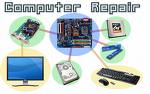
Showing posts with label computer repair. Show all posts

Home Study Computer Repair Course

There are millions of personal computers in use today. And someone has to maintain, troubleshoot, and repair them. With PCDI's convenient home study course, you can learn how it's done! However, there are certain skills you need to begin a career as a PC Repair Technician.

We'll teach you computer repair, from the monitor to mouse, from memory to motherboard. And it's not as complicated as you might think. Our training will teach you to:
  • Add printers, software, scanners, joysticks, etc. to your computer.
  • Troubleshoot, install, and maintain your computer system.
  • Remove and replace CPUs, motherboards, and memory.
  • Prepare for the A+® Certification exam, and much more.
Many PC repairs involve easy disassembly followed by quick plug-in replacement of parts; many other problems are fixed by running diagnostic programs and letting the software guide the work.

Our distance learning course takes you through the step-by-step procedures covered in the A+ Certification exam. When you graduate, you should have the skills and the knowledge required to take this exam, which is recognized as the industry standard for entry level computer technicians.


Request free information and find the best matching course matching your needs below.

Source:- www.homestudycourses.net


Home Computer Repair - The Do Nots

If you think home computer repair is hard or next to impossible then please read this article.

Ok, so you are almost certainly here reading this because you have, or believe you have a computer predicament, or maybe your home computer is just not performing normal. DO NOT do the flying experiment! Your computer cannot fly, and will by no means be able to fly, so do not test this theory out of your second story window! Simple home computer repair techniques I will explain to you will help; all while your bank account stays untouched(credit cards too)

So concerning this blog... I am going to be schooling you (not selling you) how to go from identifying that you have a home computer repair problem, all the way to fixing that same problem. The principle is to get your home computer functioning the way you want it to.

Along the journey you will learn I do own and control a home computer repair and services company, BUT in no way am I at this juncture to solicit their services. We only service a very little area in southeast Michigan. Be taught what you can here for free, so that you will not require any home computer repair gurus for help.

What not to do. Do not shell out for such programs like Norton Anti Virus, Mcafee Anti Virus, or any other over priced program. These programs expend more on advertising than on the quality of their product, and most will not assist you in your mission to get your home computer repaired. Also there are programs obtainable only by way of the internet which will not resolve any of your home computer repair problems and only make your bank account decrease.

Some programs are, Registry Repair, Registry Cleaner, Reg Mechanic, and Reg Cure. These programs will cause you a lot greater harm than benefit, and there are not a lot of ways to get help in the occasion you do not recognize how it works.

I have experimented with most of the programs in one way or more on my home computer. You can discover a lot of them when you do a very easy Google query for "home computer repair". I have thus far not found one program that works effectively for a broad variety of computer repair problems. There are a number of programs that function well for very precise list of home computer repair jobs, the problem then is in recognizing your individual issue, and can it be fixed without spending money; often the answer is yes!

In the occasion I do ever find a program that can resolve a lot of the normal home computer repair issues, I won't delay in endorsing the program and I will profit monetarily. You have been warned. I am human and this is what I love to do, if I can get paid for it, while staying honest, I will. Until then, on with the free home computer repair counsel and instruction...

Source: http://goo.gl/v0fcn

Computer Repair the Remote Way

If the computer is a technological marvel, Internet has outwitted it, and it has taken even computer repairs into unprecedented heights. Computer repair itself can now be managed through the virtual medium.

Online computer repair is routinely done nowadays by the manufacturing company, which has sold the machine to the computer owner. They invariably have an ID with which they can log on to the computer and manage the repairs during the warranty period. After the initial warranty period if the buyer opts for extended warranties, the provision for computer repairs through online access will continue.

Independent computer service centers also provide remote access repair services. Since most service providers offer the choice of online service along with on site or off site computer repairs, it is up to the customer to choose which one he needs. While doing repair via remote access, the technician will be able to see the customers computer fully on his computer screen. This means that he will be seeing all the errors and problems exactly as the customer is seeing it sitting in front of the computer. This facility makes it easy for the customer because he does not have to mail to the technicians or explain to him orally what the error is.

Different types of PC repairs like getting rid of viruses, removing spy ware, installing software, updating software or operating system, reversing file corruption, and all forms of computer optimization can easily be done through remote access. Computer repair requirements resulting from mechanical reasons will be less amenable to repair by remote access. At least some of the problems will require on site repair.

Even so, service providers will be able to identify the problem from a distance without having to come in person and examine the machine. Sometimes they will be able to rectify the problem by giving online guidance to the customer. Also getting a diagnosis done by remote access saves them time and the need to travel just for examining.

Even though during online repairs the machine is completely left open to the technician at the other end, the owner does not completely lose control over the machine. There is a provision, which allows the owner to deny access if he feels that there is misuse. The connection program that allows remote access is generally disconnected after the repair and reactivated when another computer repair becomes necessary.

With time being a constraint for everyone, lots of people prefer to have their computer repairs done through remote access. As long as users have a good Internet connection, problems can be solved instantly. Online computer service providers generally charge an hourly rate. It is a money saver formula for both the customer and the service provider. Since the traveling expense is not there, the technician will be able to charge less for it, and also provide the service at all times of the day.

The Internet is chock-a-block with remote access computer repair specialists. By doing comparison-shopping and also basing the selection on personal recommendations, customers can choose from among them. Though professional ethics will prevent the service providers from misusing the computer access that they have been given, some people may be uncomfortable about keeping their machines open to others and may prefer not to avail the facility.

Source: http://goo.gl/hiWfJ

Computer Repair - What You Need to Know

Has your computer been testing your patience for a long time? Picture this: you're in the middle of emailing a crucial report to your boss when suddenly, your computer freezes and doesn't respond to your desperate mouse clicks. Or it restarts every now and then, and you wonder why it happens all the time. Don't lose your cool-having your computer repaired can still revive the operation of your machine. If your computer is acting up, don't ignore the symptoms, either. Computer repair should be done as early as possible to prevent further troubles.

It's interesting to note that many people own computers but only a few of them know how to fix computer problems. Usually, computer owners seek the help of computer technicians to correct or solve the problem. That's why computers repair shops proliferate everyday and make lots of money from their customers.

If you're looking for a computer technician, you can find many business cards and fliers that advertise pc repair services. It'd be better if you take your computer to a small repair shop in your locality because its services are less expensive than that of large PC repair shops.

It's not enough to rely solely on the expertise of the person you hired to repair your computer. Try to keep yourself informed about computers so that you won't be deceived by unscrupulous technicians. Also, make sure that the technician you hire is competent and skilled enough. A good repair person can accurately diagnose the problem of your computer and provide a reasonable estimate of cost and repair time.

Always make sure the amount that repair shops charge you is fair. If you think the cost of repairing your pc is expensive, you can request for a detailed description of the tasks that were done and the price of each. If you're still not convinced, then you can try negotiating the price. Asking the repair shop to lower their charge can pay off in some instances.

Besides repair shops, you can also try to avail of a remote pc repair service. This service works by using remote screen sharing software to connect your computer to the repair company. The company then solves your computer problems from its office.


Source: http://goo.gl/uzMQ8

Texas PC Repair Now Requires PI License

From its Texas Rangers to its enthusiastic take on the death penalty, the Lone Star State has long been known for its aggressive stance on law enforcement. Thanks to a strange new, law it's a sting that may soon be felt by a number of the state's computer-repair people.

A recently passed law requires that Texas computer-repair technicians have a private-investigator license, according to a story posted by a Dallas-Fort Worth CW affiliate .


In order to obtain said license, technicians must receive a criminal justice degree or participate in a three-year apprenticeship. Those shops that refuse to participate will be forced to shut down. Violators of the new law can be hit with a $4,000 dollar fine and up to a year in jail, penalties that apply to customers who seek out their services.

Some of the area's larger companies already employee technicians with PI licenses, a fact which generally doesn't apply to small computer repair shops.

Originally published on Gearlog .

Source:- www.pcmag.com


Windows Vista speed!

Vista is the management program of Windows. It has nice visual effects but unfortunately it appears that the computer is often slow and that is not the intention. Learn how to read a few tricks to make Vista faster. Read the tips carefully and enter them as good as possible.


Startup Programs


The more programs when you boot the computer, the longer this takes. This is not useful, because most programs are not immediately needed. Open so Start, then Control Panel. Choose System and Maintenance, and then click on Tools and information on performance. Click links on the Manage Startup Programs link. A screen of Windows Defender will open with all programs that open at startup. Click a link for a program that you do not need to start and then right click Disable.

Visual effects


The new Vista Aero effects will be very beautiful. But all three-dimensional effects and transparent window Vista slower pieces. Therefore it is wise to at least some effects off. Go to Control Panel and select System and Maintenance, then System. Click links on Advanced system settings. On the Advanced tab, press Settings in the Performance box. On the Visual Effects tab, choose Custom. Remove the check marks away from the unnecessary effects. The more you remove, the faster the computer. Then press OK.


Service Pack 1


In Service Pack 1 for Windows Vista are many upgrades that make sure that Windows Vista performs better and faster. Do you download by clicking HERE and then click Download.


Disk Cleanup


The hard disk you should regularly clean up because there are many unnecessary things in it. Go to Start> All Programs> Accessories> System Tools> Disk Cleanup. A window opens where you select the hard drive with your files (similar to the defragmentation. Then you wait a while. Then you can check the things you want to delete. Vink all things except the things you really ndoig have such as Office Setup files. Then press OK and things are removed.


Defragmentation


Vista is faster as you once every month defragments your hard disk. Go to Start> All Programs> Accessories> System Tools> Disk Defragmenter. A window opens, where you see your hard disks. Press the hard disk with the most information (usually the C-or D-Disk). Press left to analyze. If this is done, a window where you need to Defragment button. Now the disc gedefragmenteert, which can last a long time. Allow the program to its finished


Internet Explorer 7


If the Internet is slow, you just browse history. Go to Tools> Delete Browsing History. In a new window that opens you need to press the Delete Temporary Internet Files, Cookies (login go or lost!) And History.


Viruses and Spyware


The computer is very slow viruses and spyware. Therefore it is important the following programs to install.

Computer network construction, wireless network with VISTA

More and more people have multiple computers at home and wish to establish a small computer network. Wired or wireless. For a network with access to the Internet to put you in any case a router. With cables or wireless, wireless. Please when buying a wireless router to speed. The g-standard, 58 Mb, is the most common. Wireless has clear benefits, but failure sensitive. Buy a good router as a cheap alternative can give many headaches. Moreover, there are other ways, such as your network through the main PC, so that in fact the role of router to take, but it ga I ease over. This provides headaches.

Grab the provider delivered Ethernet modem and connect it to the router. Choose the WAN port on the router. Cable Modems are the general problems connecting. The wireless modems can be quite different. There are wireless Ethernet modems that when setting the maximum security loss. Let you have good information. The installation of a wireless router is difficult. For the wireless connection, there are special USB adapters or PCI cards. Note there are several brands that they are compatible.

Each router has its own configuration page, you can view your web browser and the settings of the router can change. For this configuration page to get you the address of the router know. If this local address in the manual, you can find the address by the router to connect via a WAN port is not free. Turn on the router and go to Windows Start, Run. Tap here Cmd and then click Ok. Tap at the end of the line in the black screen in the command ipconfig / all in, with a space between and Ipconfig / all. Press Enter. Then you get all the IP address data. The IP address of the router is listed under Default gateway, and usually begins with 10.0.0.xxx or 192.168.x.xxx. Starts the displayed IP address with 169, then there is a communication problem with the router.

The IP address of the router in typing in the address bar of Internet Explorer or another browser, you can login to the router. Windows Vista may be different. To do this, click the Network icon in the Network Center. Vista scans the network. Right-click on the displayed Web page and choose router device display. Anyway, log in now with the default password. Often that is admin, unless the instructions indicate otherwise.

Depending on the computer configuration is built after the connection to the router how the Internet between provider and your router will be undertaken. Sometimes some settings of the Internet, the gateway is adapted to that end, most routers an installation wizard, you can use. You can also easily view the network via Start, Run. Now run ncpa.cpl, and then click Ok. You can use the network to identify the name of your router and the strength of the signal. Click the wireless network and are immediately connected. The closer the PC to the router is the stronger the signal. The best place for a router and modem is near the place where the signal enters the house. That may be in the meter, just to the splitter. Or just where the cable from the provider enters the house. The closer, the better the reception. The connection to the router improves greatly if the router is set to G-only. Then, the connection according to the specifications of the g-standard, 54Mb.

5 tips for Windows Vista

Everyone has a need, therefore, follows a number of useful tips for Windows Vista! In this article I'll explain how eg Windows Vista User Account Control (User Account Control) can turn off.

Tip 1.
Shortcuts in Windows Vista
Everyone she ever needed below a list of handy shortcuts.
Windows Logo (W) = this is the Windows key provided, this is next to the left Ctrl key.

W * Start Menu View

* W + D Desktop Display
* W + E Open Computer
* W + F Find
* W + M minimize all windows
* W + R to open Run
* W + T Switch between programs from the taskbar
* W + G Browse Gadgets
* W + Spacebar All gadgets for windows
* W + Tab switch between windows using Windows Flip
* W + Right Arrow + Enter Hibernate
* W + Right Arrow (3x) + U PC shutdown
* W + Right Arrow (3x) + R PC restart
* W + B + Left Arrow Show date
* W + B + Left Arrow + Enter Show calendar

Tip 2.
Windows Vista User Account Control (User account control) off.
Windows Vista security is tightened so nice let Windows in almost every operation a popup window where you give permission to continue. But sometimes you have to allow 5 minutes and can be frustrating.
1. Go to Start and then click "Control Panel".
2. The Control Panel opens, ga now in the configuration screen to the "User Accounts and Parental Control."
3. Go to the "User".
4. Once there, click on "User Account Control on or off.
5. It is now requested approval click "Continue"
6. The last window will open and check the box for "User User Account Control (UAC) to help protect your computer" now and press OK.
7. Windows Vista User Account Control is disabled.

Tip 3.
Add gadgets to the sidebar
Would you add new gadgets to your sidebar? This can be clearly explained below.
1. Go to your desktop and click with your right-click "Add Gadgets ..."
2. You will now see a folder with all the gadgets, and click on the gadget and drag that to your Sidebar.
3. You can drag the gadgets to them in another place.
4. For more gadgets to add to the folder in the folder you click on "More gadgets download gadgets that you can download and are automatically added to the folder.

Tip 4.
Hidden files in a folder.
1. Go to Start and click Control Panel.
2. Go to "Design to customize personal preferences" and click Folder Options.
3. In the new window to view and search the list on the option "Hidden files and folders".
4. Click "Hidden files and folders" and press OK.
5. All hidden files are visible.

Tip 5.
Send photos from Windows Photo Gallery
1. Open the photo in Windows Photo Gallery
2. Right click on top of "E-mail".
3. Select the desired preset size. (I recommend the original big store)
4. That outlook is launched and the picture is transmitted.

Safe surfing and computer use

Daily use your computer. Much of what you do on your PC leaves behind a trail somewhere. Search in Google, what programs you have open, which websites you have visited. Is that a problem? sometimes! Below are tips to help secure computer at home.

In normal computer remember a number of programs which are executed. Internet explorer or other default Web browsers remember about 20 days Internet sites you've visited. In addition, keywords in Google for example be remembered. Often there are also passwords for protected sites in the history of the browser.

Also windows explorer, the program that you use to browse through folders and files or programs open in history. For example for windows prefetch, a tool that "learns" to frequently used programs faster to boot.

Below is a description to ensure that Internet Explorer and Google no history, remember passwords or keywords. Also search in Google for example will no longer remember this normally done by 'Auto complete'.

You can also separate items from your search history by using the down arrow to highlight a previous search, and press Delete. The history in windows is difficult to continue. However, you can choose that not everyone can see what files you have opened.

* Click the right mouse button on the taskbar (not start but next to it)
* Select properties
* Choose the tab 'start menu'
* Click to adjust
* Advanced tab
* Where you can remove the check mark at 'recently opened files in a list.

On the hard drive a number of invisible folders "where data is stored:

* Temporary files
* Trash
* History opened and exported files
* Recently opened files

To delete these files, the above program useful.

Of course it is important to an up-to-date virus scanner on your computer so that viruses, key-loggers, trojans, adware and spyware no chance. A good virus scanner is for example: McAfee or Norton antivirus antivirus. Often, these anti-virus software with a complete package to your computer secure.

Also to enable a firewall is needed. From Windows XP SP2 is included it with windows.

Common errors in Windows

Whether you like or do not want the computer still failed to appear and hinder your work. Some errors are not serious and not much to influence the process used. Knowledge of these errors and how to overcome them is the knowledge and computer users should have.

1. Error "caused a general protection fault in module.
This is a GPF error (General Protection fault - an error general protection) that destroyed the operating system, one in serious error caused the blue screen. You can see GPF error if a program is trying to write data to a storage area restrictions, or system error of memory needed to implement a function is.
Solutions GPF error is rebooting the computer. As causes of this phenomenon so many difficult to determine precisely the origin cause problems. Resolve the most basic is uninstall all the software and hardware in the nearest time, perform maintenance on the system overall, and implementation of a "clean boot".

2. Error "Rundll: error loading. The modle specified could not be found ".
Error message "Rundll" appears when Windows can not determine the position that a file it should download. Error may be related to software not remove all, or driver error, virus, or spyware.
Solutions you need to do is run kill spyware applications (such as Ad-ware and Spybot Search & Destroy) and then the virus scanning system. If error related to a software installation, please uninstall the software from. Finally, you need to start your computer in clean mode to determine the command line causes the error.

3. Error "Can not find the file (or one of its components). Make sure the path and filename are correct and that all required libraries are available ".
Just a headache, error messages may be symptoms of a small event, such as mistakenly deleting files, or a large event, such as the virus has spread throughout the system . You need to do a virus scan and reinstall the program-related files (file) missing. If the error still occurs, use My Computer or Windows Explorer to determine the exact name and location of the file.
This error can only happen when you double-click the shortcut on the Desktop. If this is the case, then simply click on the shortcut, select Properties, then type the exact name and path in the Target.

4. "Windows Update has encountered an error and can not display the requested page."
A common error related to the installation of the latest upgrade for Windows. This error prevents you access to the Web site upgrade Windows Update (http://windowsupdate.microsoft.com). How to fix this?
In most cases, you can correct the error set by the latest IE. In addition, users of Windows XP and Windows 2000 should install the latest service pack for the operating system. In Windows XP, you need to activate the automatic upgrade Automated Updates (open Control Panel, select Performance And Maintenance, System, select the Automatic Updates tab, then select the Automatic).

5. "Windows encountered an error Accessing the System Registry. Windows will restart and repair the system Registry for you. "
Registry is a database storage system configuration and reference users, they are very sensitive and with any dangerous operation is made for Windows is "do break". We can use the solutions below ...
Create an empty space on the Windows installation drive (minimum of 10%). Delete the old file is not used to. Next use the Windows Me and Windows XP need to restore the computer and the initial state until the problem occurs. Clicking on Start, Programs, Accessories, System Tools, System Restore. When you open System Restore utility, you select Restore My Computer To An Early Times, click Next, and select a time of need recovery (day occurred before the error message), then follow the instructions.

Operating System help and support

The mix of applications

We do not recommend that you ignore the applications are using. If you are a graphic designer, working in 3dsmax, you will see many advantages when property has a CPU speed even with all other components such as memory ...

Even so, most people are not using the application form. That is why we need to consider the problem of mixed applications. For applications requiring strict but do not use regularly, you also do not constitute a leadership that CPU must meet.

Issues mixed applications in an angle that can be a burden for the processor even more than one application depth, the processor core application specific. So it is mixed application will create a big difference for the choice of CPU will work how.

Understand your application

Do you know the applications of their work like? Easily notice that, applications will need Word CPU less than Photoshop. In other words, if a user of Photoshop former you like a system has more memory or hard drive more than first complete CPU. Even to the applications in the computer game different, may need to manifold. For example, a shooter may prefer to have a great graphics card.

So take a moment to research the most common applications of how you will be much useful, not only select a set of processors of the best that can modify the system and applications for the best results.

Considering the background tasks

You are using Windows XP or Windows Vista? To consider your Task bar. In my Task bar with 8 icons of the application of lightweight, they are all very useful and necessary. You should also try to review Task manager. Often have large numbers of applications and services running in the background later. Many things are in idle mode, but some other continuously occupied lost a cycle of CPU processing.

Obviously you can really turn off all unnecessary services. But the system is when I do it idle will help you assess the needs of you. Background tasks will not matter for CPU choice but you also need to know to minimize CPU use for this task.

Other users need

If you have other people share a computer, they have their own ID, you may need to consider what they need. Can all you need to do with computers as writing an email, perform a small calculation and web surfing. Wife or husband but you are using software as a serious software such as Photoshop, the child of your preferred gaming machine. What their needs may need to set a good processor for the system, and clearly far beyond the needs of your needs. This shows that not always depend on you.

The less known features in Windows 7

First impressions of the test version of Windows 7 suggest that the new operating system will not cause a landslide. Number seven has a few nice features that enrich the interface. If you can shake 'with the mouse to non-active windows immediately to minimize. Only the selected window is still open. The function is handed over to a full screen application windows to be cleaned up immediately to grasp gadgets on your desktop live.

The Shake feature works only if the Aero interface enabled. Another little discussed feature in Windows 7 is an index that indicates how stable your computer. The Reliability Monitor hides in the new Windows Solutions Center, a component that gives users tools to solve problems. The Reliabilty Monitor delivers a score of 0 to 10 (where'10 'stands for stable) and is based on a measurement by the Ractask component of a long time. A first score appears only after several hours, but longer term there may be a stability review weekly, monthly or even annual basis be requested. A third feature is exposed in the Credential Manager. This is an ingrained 'safe' for log-ins, passwords and certificates - for example, largely similar to the Keychain in Mac OS X.

The first signs of an early Windows 7 feature complete version to observe. It does not last long. Soon is Microsoft's public beta version of the successor to Windows Vista. Windows 7 is the first operating system that is written according to a new protocol. For several components, new features to be completely written before they are added to the overall build. For other components (such as explorer) are features which previously added because they have a major impact on all other parts. In some cases, these features turned off. (but to unlock). This new approach ensures that the quality and number of public build may be limited. Since only complete feature will be added to Microsoft most likely a single Beta build. Normally the latest beta build of Windows the feature complete version, that can be started with the crush of bugs in the Release Candidate versions. Of course this is all highly speculative, because Windows Vista introduces a substantially new code base for many components, which may be more robust than the code bases of previous versions of Windows.

How to repair computer by your self ?

Every day, most of people all over the world faces the problems with their personal computers. Some computer problems are easier to repair and some others are very difficult. Just as with automobile repairs, there are some steps you should follow when repairing your personal computer by your own. You can do yourself, and save you from having to pay for costly repairs in a computer repair shop.

Generally there are two types of problems that you can encounter when operating your computer. These problems either may be problems with software, or problems with hardware.

The first step to use when you are facing problem with your computer and want to repairing it is the process of elimination. If your computer is running much more slowly than usual, or giving many error messages, try closing any programs that you currently are not using. Leaving programs opened when they are not in use can cause your computer to become unstable and sluggish.

If you have closed your unused programs and still facing same slow operating system or intermittent error messages, close every open program and reboot your computer once. Rebooting your computer clears system resources such as unused memory and hard disk space that programs and files take up. You can delete temporary files and folder. Even you can run the disk cleanup utility:

> Start
> All Program
> Accessories
> System Tools
> Disk Cleanup

If you still encounter errors with software, then you can try un-installing the application, or upgrading to the latest version of the application and device drivers.

After rebooting the computer, delete any un-wanted files that you do not need anymore such as old word processing documents, files in your Internet history, and Internet cookies. Keeping old and unused files on your hard drive, especially your Internet browsing history, Internet temporary files and cookies. It is possibility that your computer could became infected with spyware and viruses. In that case you would have to full scan your all files such as word processing documents and pictures in the future, move them to a removable storage device such as a floppy disk CD-ROM or a jump drive.

iYogi Acquires Clean Machine Inc.

Larry Gordon, Founder of Clean Machine appointed as President Global Channel Sales at iYogi


New York, NY, May 11th, 2009 : iYogi, a global direct to consumer and small business remote technical support provider, today announced it’s acquisition of Clean Machine Inc, a provider of remotely administered PC security and performance management services. Clean Machine will operate as a separate brand under the iYogi services umbrella along with the recently lunched Support Dock (www.supportdock.com) and its comprehensive range of 24/7 technical support services for computers, printers, MP3 players, digital camera, routers, servers and more than 100 software applications. Larry Gordon, Founder of Clean Machine is appointed as the President of Global Channel Sales for iYogi.

computer repair,help and support

iYogi will integrate technology and innovation that Clean Machine Inc. has developed for delivering an enhanced service experience by proactively managing the health and security for PC's and Apple Computers. This acquisition also broadens iYogi's access to key markets through Clean Machine's existing partnerships. Larry Gordon's past experience and successful track record will accelerate iYogi's expansion through his focus on global alliances.
Commenting on the acquisition of Clean Machine Inc., Uday Challu, CEO & Co-founder of iYogi, said,

"This acquisition will help iYogi to enhance our customer experience and extend our market reach to the millions of consumers that are challenged by the increasingly complex technology environment. Clean Machine's proactive maintenance and management of PCs in home and small business environment will be our launch platform for building the next generation of managed services for consumers."

"We are delighted to have Larry spearheading partnerships and global alliances for iYogi. His incredible experience in marketing, sales and building global alliances will help forge partnerships with retailers, multiple service operators, software publishers, original equipment manufacturers (OEM) and other such companies that are at the frontlines for managing tech support issues for consumers and small businesses",
added Challu.


With more than 20 years of experience, Larry Gordon has played a variety of strategic roles in marketing, sales and building alliances. Larry was the Executive Vice President at Capgemini and Kanbay. He was also VP of Global Marketing for Cognizant (Nasdaq: CTSH), a leader in global IT services and Director of Marketing for New York based Information Builders.

"I am excited to join a company that shares a common mission to Clean Machine in creating a global brand for delivering the best technical support to consumers and small businesses. We also share a common approach of utilizing highly skilled talent with leading edge tools, thereby delivering services at incredible price-points, with high margins for our partners",
said Larry Gordon, the newly appointed President of Global Channel Sales at iYogi.

ABOUT IYOGI


Headquartered in Gurgaon, India with offices in New York, USA, iYogi provides personalized computer support for consumers and small businesses in United States, United Kingdom, Canada and Australia. IYogi's 24/7 phone and remote technical assistance, spans across a comprehensive range of technologies we use every day from a wide range of vendors. Utilizing its proprietary technology iMantra , and highly qualified technicians, iYogi delivers amongst the highest benchmarks for resolution and customer satisfaction. iYogi is privately held and funded by SAP Ventures, Canaan Partners, and SVB India Capital Partners. iYogi was recently awarded the Red Herring Global 100 Award, recognizing it as one of the 100 most innovative private companies driving the future of technology. For more information on iYogi and a detailed list of technologies supported, visit: www.iyogi.net.

ABOUT CLEAN MACHINE


Clean Machine Inc. is a NJ-based and incorporated company that helps consumers and small business owners easily manage and protect their computing environments safely and cost effectively. The company is has a unique, powerful and inexpensive PC concierge service. Specifically, each customer is assigned a highly-trained tech concierge who remotely examines their computer system on a scheduled and very secure basis. The PC concierge will immediately fix software-based problems and prevent new threats to the customer's computing environment including offensive pop-ups, browser redirects and slow performance, and then provides a detailed report. Clean Machine's proprietary Radar(TM) technology (Remote Access Detection Audit and Repair) allows its expert technicians to remotely resolve any problems, eliminating the need for customers to go through the frustrating process of speaking with a tech support expert, and still having to do the work themselves. In other words, the Clean Machine PC concierges do it all. For more information on Clean Machine please visit www.pccleanmachine.com.

Master Your Remote Computer Repair

Cross-platform media player VLC is often referred to as the "Swiss Army knife of media applications" for good reason: Not only does VLC play nearly any file you throw at it (you even voted it the best desktop media player), but it can do so much more. From ripping DVDs to converting files to iPod-friendly formats, let's take a look at the four coolest things you can do with VLC and start you on your way to becoming a VLC ninja. Photo by R'eyes.

NOTE: Many of these VLC tricks use the same dialogs, so rather than repeat the same steps every time, I'll be doing a thorough step-by-step once and then highlighting only the differences in the subsequent mini-guides. I'm using Windows in most of my examples, but since VLC is cross-platform, most of the same tricks should work just as well on any platform. VLC has a Streaming and Transcoding Wizard that's supposed to make this process even easier, but it's been buggy for me in all my tests, so I decided to go with the slightly more difficult method detailed below.

Rip Any DVD

You may have thought that you needed some fancy DVD ripping tools to rip DVDs to your hard drive, but VLC can actually rip any DVD with ease. As reader joelena pointed out, since VLC plays the DVD in order to encode it, it can bypass any copy protection. Here's how it works:
  1. Open the Disc and Find the Correct Title: Insert your DVD and open it with File -> Open Disc. We need to find the right title to rip from the DVD, so at this point we're going to preview titles from the disc one by one. To do this, start with 0 as your title number and increment one number at a time until you find the title you want to rip. I've found it's quicker if you choose DVD rather than DVD (menus) at the top of the Open dialog so you only have to wade through actual video.
  2. Pick a Folder to Save the Rip and Name It: Now that you've find the right track, you just need to tell VLC that you want to save it. To do so, tick the Stream/Save checkbox, then click Settings. Here you need to tell VLC where to save the file, so tick the File checkbox and pick a folder to save it to and then give it a name (e.g., My DVD Rip.mpg).
  3. video-and-audio-output-settings.pngDetermine Video and Audio Settings: Now you're ready to tweak the final settings before it's time to rip. Tick the Video codec and Audio codec, then choose the output codecs you prefer. This is really up to you, and if you don't have a preference I've had good results using the defaults described in this excellent VLC rip guide: mp1v for the video codec and mp3 for audio. If you need a specific file format for a mobile device, you may want to choose a difference encapsulation method and codec. Hit OK when you're done.
  4. Rip Away: You've made it. Just hit OK again (make sure Stream/Save is checked) and it should start ripping.

vlc-progress.pngVLC will rip the DVD faster than real-time playback, and you can follow the ripping process in the corner of the VLC window.

Convert Any Video for Your iPod or iPhone with a Drag and Drop Batch Script

vlc-ipod-converter1.pngIf you regularly convert files to a specific file format—say, for your iPod—you can set up a batch file with VLC that will make video conversions as easy as dragging and dropping the to-be-converted file onto the script.

Create a new text file and save it as VLC Converter.bat. Make sure your filesystem is showing file extensions so you aren't saving it as a text file (you don't want to end up with something like VLC Converter.bat.txt). You need to make sure it's saving with the BAT extension.

command-line-options.pngIf you were building the script from scratch, at this point you'd open up the file you just created and paste "C:\Program Files\VideoLAN\VLC\vlc.exe" %1 in the first line. Now you need to get the command line options that describe how VLC should convert the file. For that, you can use the text generated by the Target textbox at the top of the Stream/Save Settings window described in steps two and three of the DVD ripping guide above, which displays the command line options you need for your batch file. Luckily a user at the iPod forums at iLounge already put together a VLC batch conversion script for iPods, so we can just use those settings, which look like this:

"C:\Program Files\VideoLAN\VLC\vlc.exe" %1 :sout=#transcode{vcodec=mp4v,vb=1024,scale=1,height=240,width=320,acodec=mp4a,ab=128,channels=2}:duplicate{dst=std{access=file,mux=mp4,dst=%1.mp4}}

That's a lot of text, but it's just telling VLC everything you would normally tell it in the Settings dialog. The %1 variable will be replaced by the name of the file you drop on the script. Copy and paste all of that text (and only that text) into your batch file and save it. That's all there is to it. Next time you have a video file you want to convert for your iPod, just drag and drop it on your newly created batch script. The script was built specifically for converting videos to an iPod-compatible format, but you can build your own scripts to do virtually common conversions you want.

Stream Media to Other Remote Computer Repair

Now that you're using VLC to rip your DVDs, you've got gigabyte after gigabyte of your videos on your desktop. Rather than copying all of those files to any other remote computer repair you'd like to play them on, VLC allows you to stream video over your network or even over the internet.

First, go to File -> Open File. Browse to the file you'd like to stream, and then—like above—tick the Stream/Save checkbox and click Settings. This time, rather than outputting the stream as a file, we're going to tick the UDP box and enter the local IP address of the computer you'd like to stream to. On Windows, you can find your computer's local IP address by opening the command prompt (Win-R, type cmd, and hit Enter), and then type ipconfig and hit Enter.


Once you've got that, enter it in the computer you're streaming from in the text box next to the UDP checkbox you just enabled. Hit OK to accept your settings, then OK again to finish the setup. While you're still on the streaming remote computer repair, go to Settings -> Add Interface -> Web Interface.

Now it's time to start the stream on your other remote computer repair, and doing so is a breeze. Just open VLC on your second computer, go to File -> Open Network Stream, and—assuming the UDP choice is selected and the port matches the port you used in the setup above (unless you changed it, they should both default to 1234), just hit OK to start the stream.

vlc-web-remote-control1.pngYou're presented with a slight problem streaming the video using VLC this way, namely that you can't control the playback from the remote VLC interface. Luckily you already enabled the web interface, so on the remote computer repair you're streaming to, open a web browser and point it to the VLC web interface. If you're streaming over a local network, find your streaming computer's IP address the same way you did with the remote computer's address above, then enter it into your browser with port 8080 appended to the end. Mine looks like http://192.168.1.2:8080. Through the web interface on the remote computer, you can control all of VLC's playback. Handy, huh?

Source : lifehacker.com/397573/master-your-digital-media-with-vlc

Microsoft releases Remote Desktop Connection Client for Mac 2

Microsoft has finally released Remote Computer Connection Client for Mac 2 after nearly a year in beta. It allows Mac users to, according to Microsoft, "easily connect to remote Windows computer."

Microsoft's website states, "With Remote Desktop Connection Client 2, you can quickly, simply and securely connect to Windows-based PCs to access Windows-based files, applications, devices, and networks from your Mac."

Features include:
One Mac, unlimited Windows. New Multiple Session Support gives Mac users simultaneous access to multiple Windows-based PCs or to a network server that hosts remote computer repair applications and files. Since it works with Vista and is a Universal application, Remote Desktop Connection Client 2 is compatible with the latest technologies on Windows and Mac platforms.

A more Mac-like experience. A redesigned user interface makes this application more customizable. Create your own keyboard shortcuts; and even access and change preferences during active sessions.

Print everything off your Mac. Access and print from Windows applications to any printer that can be configured from your Intel- or PowerPC-based Macs.

Get fast updates and easy help. Microsoft Error Reporting Tool and Microsoft AutoUpdate are included so you can anonymously submit data on software related issues and get software updates as soon as they are available. Remote Desktop Connection Client 2 also takes advantage of the new Helpviewer and improved help topics for quick access to fresh online product help from within the application.

Reduce security breaches. Network Level Authentication (NLA) is a new authentication method in Windows Vista that offers security enhancements that can help to protect the remote computer repair from hackers and malicious software. It completes user authentication before you establish a full Remote Desktop Connection. Please see Windows Help for more details on network level authentication.

This free download runs natively on both Intel-based and PowerPC-based Macs and supports eight languages: English, French, German, Italian, Swedish, Spanish, Dutch, and Japanese.

Source : macdailynews.com/index.php/weblog/comments/17731/

Geek Squad, P.I.? Computer Repair Uproar in Texas

A Texas law passed in 2007 has remote computer repair shops statewide up in arms. Seemingly pressured by the Private Investigator lobby, lawmakers enacted House Bill 2833, which seems to require computer repair personnel to obtain a Private Investigator license before being allowed to work on customers' computers.

The relevant sections of the law in question

"A person acts as an investigations company for the purposes of this chapter if the person:
(1) engages in the business of obtaining or furnishing, or accepts employment to obtain or furnish, information related to:
[...]
(B) the identity, habits, business, occupation, knowledge, efficiency, loyalty, movement, location, affiliations, associations, transactions, acts, reputation, or character of a person;
[...]
(b) For purposes of Subsection (a)(1), obtaining or furnishing information includes information obtained or furnished through the review and analysis of, and the investigation into the content of, remote computer-based data not available to the public."

According to a lawsuit initiated by the newly-established Texas Chapter of the Institute for Justice, the Texas Private Security Board, a state agency, is interpreting this as including simple computer repairs such as malware removal.

The law provides for punishment of up to one year in jail and $4,000 in fines, and up to $10,000 in civil penalties. Additionally, any customer knowingly enlisting the help of an unlicensed computer repair person (that is, without a PI license) is subject to the same punishment.

Matt Miller, Texas Institute for Justice Executive Director and lead attorney on the case, notes that "it makes no sense to require a remote computer repairman with 10 or 20 years of experience to get a degree in criminal justice just to continue working in his occupation. This law will drive up the price of remote computer repair for everyone, and that’s exactly what the private investigations industry wants."

For many small computer repair shops, this law would mean having to shut down their business until they acquire a license. To get a PI license, one needs either a criminal justice degree (with all associated costs) or a three-year apprenticeship under a licensed PI. Neither are realistic options for most small computer repair shops.

While it remains to be seen how this law will be interpreted by the TPSB and the courts, it sure is reopening the discussion about whether or not remote computer repair workers should be certified, and how. Computer repair is one of only a handful of professions that do not need certification in order to operate a business.

Source : enterpriseitplanet.com/networking/news/article.php/3757406

Shop brings 'more mothering' approach to computer repair

Your computer's making a funny noise. It won't turn on. Smoke's pouring out the back.

Maybe you spilled orange juice on it. Or ran over it with your car.

That Computer Chick has seen it all — and fixed it — at her two Marietta repair shops. And she doesn't make a peep about how you could possibly have gotten yourself into this predicament.

Linda Pereira, That Chick herself, said many of her male customers have admitted bringing their computers to her because she's a woman.

"They're intimidated by the men because the men talk over their heads," she said.

Pereira, 43, has five women on staff, plus one boychick. That's her son, Andy, who's leaving in a few months for college.

"We're more mothering," Pereira said. "When you come in, we sympathize with your problem instead of being like, 'You idiot.' I think they just want somebody to kind of hold their hand and not make them feel bad."

After all, the company slogan is: "Because you shouldn't hate your remote computer repair."

Pereira's clientele is evenly split between men and women. Her staff works on residential and small business computers and iPods, usually handling three to 10 per day.

Jack McKinney, 77, of Kennesaw, has been relying on That Computer Chick since she went into business in 2003.

"She hasn't let me down yet," he said.

McKinney drops in when he's getting a haircut nearby just to chat and ask questions — free of charge.

"I wish I had a problem because I wish I could go there to get it fixed," he said. "They make it such a pleasure."

Customers enter a welcoming environment where the walls are alligator green, the same color as Pereira's kitchen at home.

"It's very soothing," she said.

The lighting is kept low and the floors are wooden, adding to the homey feel. The counter is metal, and Pereira encourages folks to plop their computers there instead of putting the hardware on the floor, as some shops insist. She knows it can be hard to bend down to pick stuff up.

If kids have to wait a while with their parents, they're given a bad hard drive and a screwdriver.

"If the kids didn't get it all the way apart and they're sad they have to leave, she'll let the kids borrow the screwdriver and take it home," said Kimberly Austin, a senior technician.

That Computer Chick expects customers to return the favor and be nice, too.

If they're rude, they run the risk of being assessed a $50 meanie fee. Pereira hasn't charged "the attitude adjustment" fee yet, but has called people and asked them to apologize to her staff. She's kicked some of them out, too.

"I've kicked out more women than men," she said with a laugh. "Some of them will apologize, and others will just decide not to come back, and we're OK with that, too."

That Computer Chick promotes its family-oriented services, and will help with content filters for children.

If people want to know what their spouses have been up to, Pereira said, "I will give them all the data and I sit down with them privately. "

She works with counseling agencies to refer spouses with addiction problems.

The company also has a donation program, refurbishing cast-off equipment from customers and giving it to people in need.

In Katrina's aftermath Pereira and one of her two daughters drove to New Orleans with five complete systems.

"When people call and ask me, 'Do you have something really cheap? I always ask them, 'Are you having a difficult time? Are you struggling?' I say, 'I can't sell you one, but I'll give you one.'

"That's because my customers donated the equipment. If you donate equipment, I'll donate my time."

Pereira requires her staff to have a volunteer background in the community. She said they make the best employees. She has hired both men and women but has a strict "no nerd" policy.

"You can tell a major nerd," she said, "and I have fired many, many a major nerd."

So, how does a nerd get fired? "They start messing with my equipment and that's when I'm done," Pereira said, laughing.

Whatever their gender, Pereira's staff does what they call "that chick thing," customizing computers without any bells and whistles.

For example, they put your data back where you left it, "instead putting it in some bizarre folder," Pereira said.

But they do take out the bugs — sometimes literally.

Pereira's staff has found spiders and cockroaches — dead and alive — inside computers.

And that's not all they discover.

Betsy Collins, 19, who is working her way up to junior tech, recalls the slurping noise a keyboard made when Pereira removed it from a laptop.

A man had forgotten to mention that his wife had spilled a milkshake on it.

"The milkshake had actually melted onto the motherboard and then it fried the computer repair," Collins said. That Computer Chick's most amazing discovery? How about 122,000 pieces of spyware in a woman's remote computer? And Pereira would have found more if the power hadn't gone out in the shop.

"She just had kids," Pereira said, "and kids will go on everything. They don't have anything in their brain saying, 'Oh, I shouldn't go on that Web site.' "

She gave the customer a copy of "Cheep Tips" to avoid the same problem.

The guidelines are so good they've cut down on some repeat business, but Pereira makes up for it with referrals.

And that chick thing applies across the motherboard.

Austin remembers working on a new hard drive one day. "Then 'puff!' this cloud of smoke came out of the remote computer repair," she said.

What color was it? Pink, of course.

Spyware everywhere

The computer repair terms "trojan" and "spyware," often don't register with customers. So, she explains that each one is like having a fire in your house.

"You wonder, 'Why can't I sit on the couch?' Because the couch is on fire. When people use these anti-spyware products to actually remove those trojans, all they're doing is putting water on the fire and putting it out. So, now, you just have a charred couch."

So, does Linda Pereira take out the couch and put a new couch in?

"I can't," she said. "I have to rebuild the whole house.

source : ajc.com/business/content/business/stories/2008/06/27/that_computer_chick.html

Texas Law requires remote computer repair techs to be Private Investigators

Unbelievable but true, in 2007 Texas decided that anyone employed as a remote computer repair technician needed to also have a Private Investigator’s license if they take any action that the government would consider “an investigation.” Because the law is so broadly worded, that could literally mean that I could replace your hard drive but not repair it. Nor could I retrieve your data. In order to comply with the law and obtain a PI license, I would have to quit supporting computers for three years and serve an apprenticeship under a licensed PI or attain a criminal justice degree. Either way, that would be several years away from technology that refreshes itself every 18 months or so.

According to the author of the law, state Representative Joe Driver, R-Garland, technicians are misinterpreting the law. Driver told the Houston Chronicle that the law was sought by the private security industry and would not apply to people who do nothing but repair hardware. It would only apply to those who retrieve data for the purposes of analysis to create a report for a third party.

According to Driver, a current class action lawsuit against the Texas Private Security Board is nothing more than a publicity stunt on the part of the Institute for Justice. But Matt Miller of the Institute for Justice says that the law is so vaguely worded that it could be enforced broadly.

The Texas Private Security Board has interpreted the law as being “data retrieval for a potential civil or criminal matter.” According to Miller, that could apply to a technician searching for the source of a virus, parents seeking to find out the names of the people their child emails or messages, or people employed by companies to determine what employees are doing on their work computers during working hours. The result of any of that kind of data retrieval and analysis could be considered potentially usable in a civil or criminal matter.

I look at it from the standpoint of having been there, done that. I have found all manner of things on a client’s PC in the course of doing a seemingly unrelated job. I have, as a part of my job, been required to provide detailed reports on user Internet activity to seniors. Probably a good thing I don’t work in Texas.

Another aspect of the law that should also be considered is that anyone in violation can be subject to criminal penalties up to a year in jail and a $4,000 fine in addition to civil penalties of up to $10,000. And that doesn’t just apply to the technician. Any consumer who knowingly uses an unlicensed company faces the same penalties.

In my opinion, the Institute for Justice is taking the right path. By forcing attention on this law, hopefully the end result will be clarification of who may do what. Perhaps this time through, Mr. Driver will consider asking an average remote computer repair technician what kinds of work they do and possibly gain consensus on what should be acceptable and what should not. I can understand the Texas Private Security Board wanting to act to protect people’s privacy but I believe that this law may be a step too far.

Share your thoughts. In the course of your day would a law like this impact you? How?

Thanks to OnTheRopes for pointing this out!

Source : blogs.techrepublic.com.com/techofalltrades/?p=162

Computer Repair Business Pushing Legislation To Combat Child Porn

A computer repair business in Georgetown Township that discovered child porn on a customer's PC is pushing for new state legislation to combat the problem.

Computer repair House Calls wants technicians to be required to report crimes against children after turning in a 52-year-old Grand Rapids man last year. Michael Robert Brown had asked for his machine to be repaired, but when child porn was spotted, the company notified police, although they didn’t have to do so. It was one of two such incidents it was involved in during 2007.

A bill has been introduced in the state Senate by Holland’s Wayne Kuipers, who will hold a hearing on the matter in Lansing this afternoon. If passed, it would require technicians with knowledge of child sexually abusive material to report their findings to police, although a specific search for such material would not be allowed.

Source : http://wkzonews.blogspot.com/2008/06/computer-repair-business-pushing.html
Powered by Blogger